How plants relate to each other when they share pollinators

Yong-Deng He and Zhong-Ming Ye, Wuhan Botanical Garden of the Chinese Academy of Sciences, discuss their article: Disentangling the mechanisms behind indirect interactions between plants via shared pollinators: Effects of neutral and niche-based processes In biodiversity hotspots like the alpine meadows of north-western Yunnan, more than 100 flowering species can bloom in a single season.…

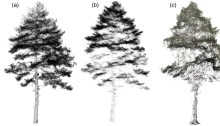
How tree growth strategies shift with age and climate: What it means for forest management

Rongxu Shan and Zilong Ma from Sun Yat-sen University, and Han Y.H. Chen from Lakehead University discuss their article: Functional traits and individual tree growth relationship weakens with stand development but strengthens with increasing temperature. Forests are far more than just collections of trees: they are vibrant, dynamic ecosystems where each tree’s growth strategy plays…

Why does heather self-organise into wave-like patterns? A mathematical investigation

Toyo Vignal, Okinawan Institute of Science and Technology in Japan, discusses her article: Surviving the winds through pattern formation: Mathematical modelling of heather stripes in Scotland. In some remote areas of the Scottish highlands, one can encounter intriguing vegetation patterns consisting of regularly arranged plants and bare soil. The first time I encountered such patterns…

Striking shifts in the timing of bryophyte spore dispersal: What 35 years of airborne DNA revealed about climate change

Fia Bengtsson, Lund University and Norwegian Institute of Nature Research, discusses her article: Rapid shifts in bryophyte phenology revealed by airborne eDNA Most of us walk past mosses and liverworts without really noticing them. But these small plants, known as bryophytes, are vital to ecosystems, including in Arctic and sub-Arctic regions. They retain water, regulate…

Reviews in Journal of Ecology

Journal of Ecology aims to bring important ecological work to its wide international audience. It publishes not just strong primary research studies that advance our understanding of ecological principles, but also Review articles that promote discussion and offer new ideas and directions in plant ecology. Our Reviews aim to be more than just a summary…

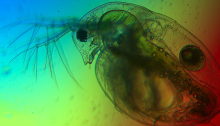
Living in a rainbow: How the light spectrum shapes phytoplankton communities and trophic transfer in aquatic ecosystems

Sebastian Neun, Institute for Chemistry and Biology of the Marine Environment (ICBM) at the University of Oldenburg, Germany, discusses his article: Light spectrum matters: Interactive effects of light and nutrients on phytoplankton communities and trophic transfer Where is the rainbow? All lakes are characterised by a tightly linked network of food chains, and phytoplankton forms…

Evolving the ability to stock up nitrogen

Alice Ardichvili, Sorbonne University, discusses her article: Spatial context allows the evolution of the control of nitrification by plants Once upon a time The project began a long time ago, in the late 1990s, when my PhD advisor J-C was still a carefree and enthusiastic individual. He and his colleagues observed that a common grass…